New Concrete Costs in Flagstaff & Northern Arizona: A 2026 Pricing Guide
If you've started pricing out a new driveway, patio, or foundation in Flagstaff, Prescott, or anywhere else in Northern Arizona, you've probably noticed the numbers don't line up neatly with the generic "concrete cost calculator" results you find online. That's not a coincidence. Most published concrete pricing content is written for a national or desert-Southwest audience, and it doesn't account for what actually changes the math at 6,000-7,000 feet: mountain-market material and fuel transport costs, a real statewide construction labor shortage, and the added labor and material required to pour and protect concrete through a genuine freeze-thaw winter.
This guide walks through real, sourced cost ranges for the new-construction and new-pour work we do most — driveways, stamped and decorative concrete, patios, foundations, garage and shop slabs, and sidewalks — and explains the regional factors that tend to push Northern Arizona pricing toward the higher end of national ranges rather than the middle. Every number here is a typical range, not a quote for your specific project. Site access, exact square footage, soil conditions, and season all move the final price, which is why we push toward a free on-site estimate before committing to a number.
New driveway costs
A standard broom-finish concrete driveway typically runs $8 to $12 per square foot installed nationally, with some sources citing a wider $4-$15 range depending on region and project specifics. A single-car driveway around 200 square feet often lands in the $1,200-$2,400 range at the lower end of that spread; a full two-car driveway scales up from there with total square footage.
Stamped or decorative driveways cost more — typically $12-$18 per square foot — because the pattern, color hardener, and sealing process add both material and labor on top of the base pour. A two-car stamped driveway commonly runs somewhere in the $6,900-$10,400 range as a full-project figure, though pattern complexity and color selection both move that number. Long hillside driveways common around Prescott and Sedona also tend to run above a flat, easy-access pad of the same square footage, simply because grading, drainage, and equipment access all take more planning and labor on a sloped site.
Stamped and decorative concrete costs
Stamped concrete generally runs $9-$22 per square foot nationally, with some regional contractor pricing for highly detailed, multi-color work running as high as $20-$33 per square foot installed. That's a wide spread, and the reason is straightforward: a single-color, single-pattern slab costs meaningfully less than a multi-color design with hand-applied accent bands or multiple stamp textures.
For reference, a small stamped patio in the 150-250 square foot range commonly totals $4,950-$8,250, and a medium 300-500 square foot patio often lands in the $7,500-$14,000 range. These are national aggregator figures — we haven't found a published Flagstaff- or Prescott-specific pricing study, so treat them as a reasonable starting point rather than a local guarantee. Sealing is worth budgeting for separately: a sealer program suited to freeze-thaw exposure protects the color and texture investment, and reapplication on a realistic schedule matters more here than it would in a warm, dry climate where UV is the main threat instead of freeze-thaw scaling.
Plain concrete patios
A standard broom-finish patio without stamping or color costs meaningfully less than decorative work — closer to standard driveway per-square-foot pricing than to stamped-concrete pricing. The main cost drivers beyond square footage are shape complexity (a simple rectangle costs less than a curved or multi-level design), site access in a wooded or sloped backyard, and any integrated features like a fire-pit pad or footings for a pergola or ramada.
New construction foundations and footings
Foundation and footing pricing is harder to generalize into a flat per-square-foot number because it depends heavily on footing depth, which — unlike almost anywhere else in Arizona — is a real, code-driven variable in our region. The City of Flagstaff and Coconino County require a minimum 30-inch footing depth into undisturbed soil for exterior footings, a genuinely deep requirement compared to most of the state. Yavapai County, covering Prescott and Prescott Valley, uses an elevation-tiered standard instead — roughly 12 inches of footing depth below 4,500 feet and 18 inches above it, which puts most Prescott-area sites (around 5,300 feet) into the deeper tier.
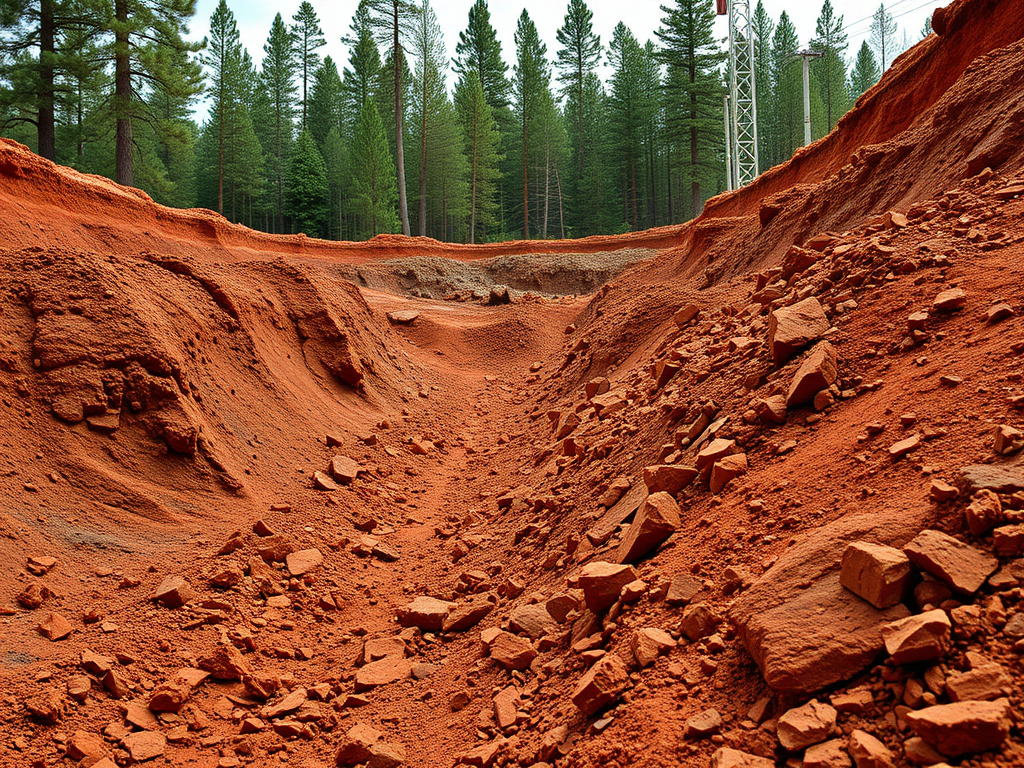
That depth difference directly affects excavation volume, material quantity, and labor time, which is why foundation and footing work is priced project-by-project rather than off a flat per-square-foot rate. Soil conditions matter too — granite bedrock, expansive clay pockets, or volcanic cinder fill can all add site-prep time depending on what's actually under a given lot, and a foundation quote that doesn't account for your specific soil and jurisdiction isn't a real number yet.
Garage, shop, and RV pad slabs
Slab pricing for garages, shops, and RV pads scales with square footage the same way a patio or driveway does, but thickness and reinforcement requirements shift the number based on what the slab needs to carry — a daily-driver two-car garage is priced differently than a slab meant to hold a loaded equipment trailer or a seasonally parked RV. Vapor barrier and moisture planning for heated or semi-conditioned shop spaces adds a further line item that an unconditioned garage slab doesn't need, and reinforcement sized for heavier loads adds material cost but meaningfully reduces long-term cracking risk under repeated heavy use.
Sidewalks and walkways
New sidewalk and entry-walkway pricing generally scales with linear footage and width rather than a flat square-foot number, since a lot of walkway work involves long, narrow runs rather than an open rectangular area. Public-facing sidewalks tied to municipal or HOA standards can add planning time for slope, width, and jointing requirements, and any steps or retaining edges needed on a sloped lot add cost beyond a straightforward flat run.
Why Northern Arizona pricing tends to run higher than the national average
Three real, verifiable factors tend to push mountain-market concrete pricing toward the top of national ranges rather than the middle:
- Material and fuel transport costs to a mountain and rural market cost more than delivering to a dense metro area like Phoenix.
- Arizona's construction labor shortage is real and well-documented at the state level — industry reporting cites more than 90% of Arizona construction firms reporting a shortage of qualified applicants, with a projected gap of roughly 200,000 construction job openings statewide against only about 80,000 qualified applicants. That statewide crunch touches Northern Arizona job sites too, even though the reporting on it is largely driven by Phoenix-metro megaprojects.
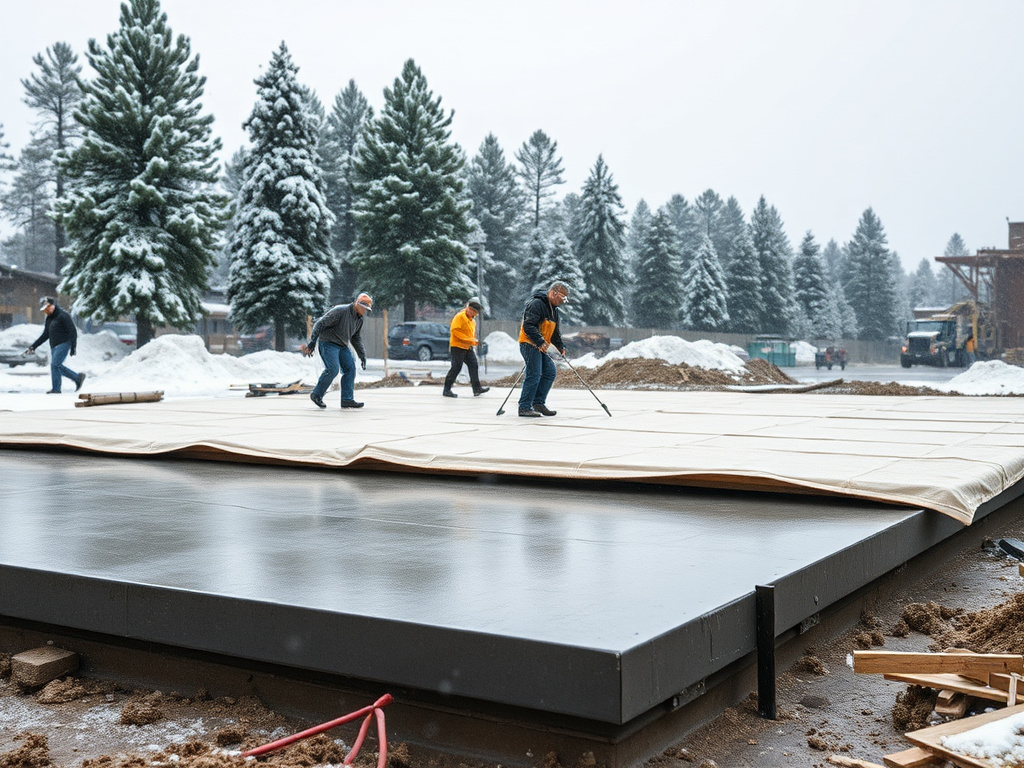
- Cold-weather pour protocol — insulated curing blankets, accelerating admixtures, and in some cases heated enclosures — adds real cost to any project scheduled outside Flagstaff's roughly June-through-September reliable pour season, and a meaningful share of Northern Arizona projects fall at least partly into that shoulder-season window.
What actually determines your final number
Across every project type, the same handful of variables move the price up or down from a generic national range:
- Total square footage and slab thickness
- Finish selection — broom, exposed aggregate, or stamped/decorative
- Site access and grading complexity, especially on hillside lots common around Prescott and Sedona
- Soil conditions and how much excavation or base correction they require
- Season — whether the pour falls inside the reliable summer window or requires cold-weather protocol
- Existing surface removal, if you're replacing an old driveway, patio, or paver installation
- Reinforcement and vapor-barrier needs, especially for garage, shop, and foundation work
Questions worth asking any Northern Arizona concrete contractor
Before you sign off on a quote, it's worth confirming a few things that matter specifically in this climate and don't always come up in a generic bid:
- Is the mix air-entrained, and to what target air content, for freeze-thaw durability?
- What's the compacted gravel base depth, and is it sized for drainage as well as load?
- What footing depth applies to your specific jurisdiction and elevation, if the project includes a foundation?
- What happens if the pour date lands in cold-weather season — is protocol built into the estimate, or will it be an added cost later?
- What sealer program is recommended for decorative or stamped work, and how often does it need reapplication in this climate?
Timeline, permitting, and how that touches cost
The City of Flagstaff generally requires building permits for most new driveways, foundations, and larger patios, and a complete application before work begins — we haven't found a published square-footage exemption for smaller flatwork, so it's worth confirming current requirements for your specific project rather than assuming a threshold that may not exist. Permitting adds lead time to a project schedule, and on new-construction jobs coordinated with a builder, that timeline usually gets folded into the broader construction schedule rather than handled as a separate step.
Season affects timeline as much as it affects cost. Flagstaff's reliable pour window runs roughly June through September, and projects that land outside it aren't impossible — they just need cold-weather protocol built into both the schedule and the price from the start. If you have flexibility on timing, scheduling a pour inside the reliable summer window generally simplifies both the process and the cost; if you don't have that flexibility, a contractor who already runs cold-weather protocol as standard practice, rather than as a rare exception, is worth prioritizing over one who doesn't.
New pour vs. stamped: thinking about the upgrade cost
For homeowners deciding between a standard broom-finish slab and a stamped or decorative upgrade, it helps to think about the incremental cost rather than the two options in isolation. The base excavation, gravel base, and air-entrained concrete mix are largely the same cost whether the final finish is plain or stamped — the added cost of going decorative sits mostly in the color hardener, stamping labor, and sealing program layered on top of that same foundation. For a driveway, that incremental jump is often in the range of a few dollars per square foot moving from broom finish toward the stamped range; for a patio meant to double as an outdoor living space, many homeowners find the upgrade pays for itself in how much more the finished space actually gets used.
Get a real number for your project
General pricing ranges are useful for budgeting, but they're not a substitute for a real look at your site. A free on-site estimate accounts for your actual square footage, soil conditions, finish preferences, and timeline, so you get a firm number instead of a guess pulled from a national average. Whether you're planning a new driveway in Flagstaff, a stamped patio in Sedona, or a foundation for a new build in Prescott Valley, we'll walk the site with you and put together a clear, written estimate — and if part of your timeline lands in cold-weather season, that gets built into the number up front instead of showing up as a surprise later.
Frequently asked questions
It's reasonable to expect it to run at or above the higher end of national pricing ranges, driven by mountain-market material transport costs, the statewide construction labor shortage, and the added cost of cold-weather pour protocol for projects scheduled outside the reliable summer season. We haven't found a direct Flagstaff-vs-Phoenix pricing study, but these are real, verifiable regional cost factors.
Yes, meaningfully more — stamped and decorative concrete typically runs $9-$22 per square foot versus a more modest range for a standard broom-finish slab, because pattern, color hardener, and sealing all add material and labor beyond a basic pour.
Because footing depth — which directly drives excavation volume and material cost — genuinely varies by jurisdiction and elevation in our region: 30 inches in Flagstaff and Coconino County versus a tiered 12-18 inch standard in Yavapai County. Add in variable soil conditions across the region, and foundation work is priced project-by-project rather than off a flat per-square-foot rate.
Ready for a free quote?
Tell us about your home and we'll build a clear, no-pressure quote.