Volcanic Cinder, Decomposed Granite & Expansive Clay: What's Actually Under Your Northern Arizona Lot
Ask a concrete contractor what's "typical" soil in Arizona and most will describe something close to Phoenix's alluvial valley fill or caliche. That description doesn't hold up once you're working in Northern Arizona, where the ground itself tells a completely different geologic story depending on whether you're in Flagstaff, Prescott, or the areas between — and where that story directly shapes how a new driveway, patio, or foundation needs to be built.
Flagstaff: pouring on an old volcanic field
The land around Flagstaff sits on the San Francisco volcanic field, home to roughly 600 cinder cones formed by Strombolian-type eruptions over hundreds of thousands of years. That geologic history shows up directly in the soil: Flagstaff-area lots commonly sit on volcanic cinder, basalt cobble, and decomposed tuff, with the exact composition varying by parcel elevation and proximity to specific volcanic features.
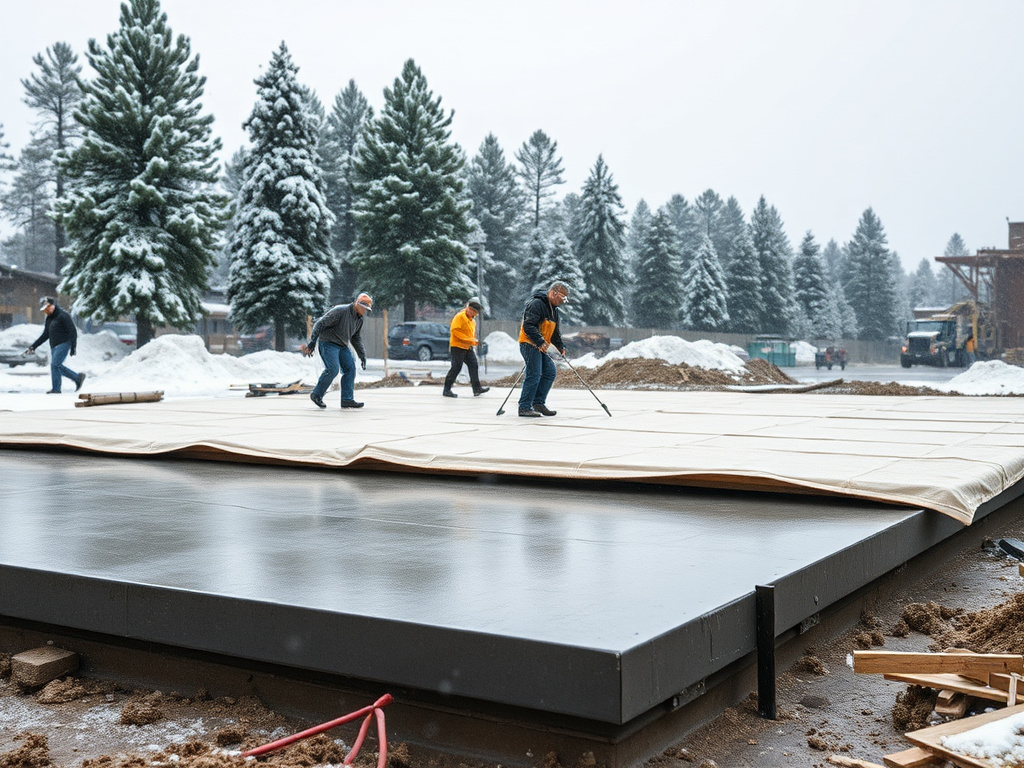
In practical terms, this affects a few things about how we plan a pour. Frozen cinder fill can slow winter excavation work, which factors into scheduling for cold-weather projects. Spring snowmelt can also soften ground near washes and temporarily raise moisture levels in cinder beds, which is part of why drainage planning matters as much as base compaction on Flagstaff-area sites — a base that isn't properly compacted and drained can behave inconsistently as seasonal moisture moves through it. Cinder material is generally granular rather than dense clay, which tends to favor drainage, but composition varies enough parcel-to-parcel that we treat that as a starting assumption to verify on site, not a blanket rule.
Prescott: bedrock and clay on the same lot
Prescott sits in the Bradshaw Mountains, and the geology here is almost the opposite story from Flagstaff's volcanic cinder — exposed granite bedrock, visible in formations like the Granite Dells, sits at or near the surface across parts of the area. But that's only half the picture. Valley and drainage areas nearby have accumulated deep, reactive clay soil deposits over time, which means a single hillside lot in the Prescott area can genuinely have shallow granite bedrock in one corner and several feet of expansive clay in another.
That variability is exactly why we don't quote base prep off a generic template for Prescott-area work. A driveway or patio pour that only accounts for bedrock will underestimate what a clay pocket needs, and vice versa — the right approach is evaluating the specific site, not assuming uniform conditions across the lot. Decomposed granite soils in particular can shift during heavy rainfall events, which is another reason drainage planning gets as much attention as excavation depth on these sites.
Expansive clay: a regional pattern, not just a Prescott issue
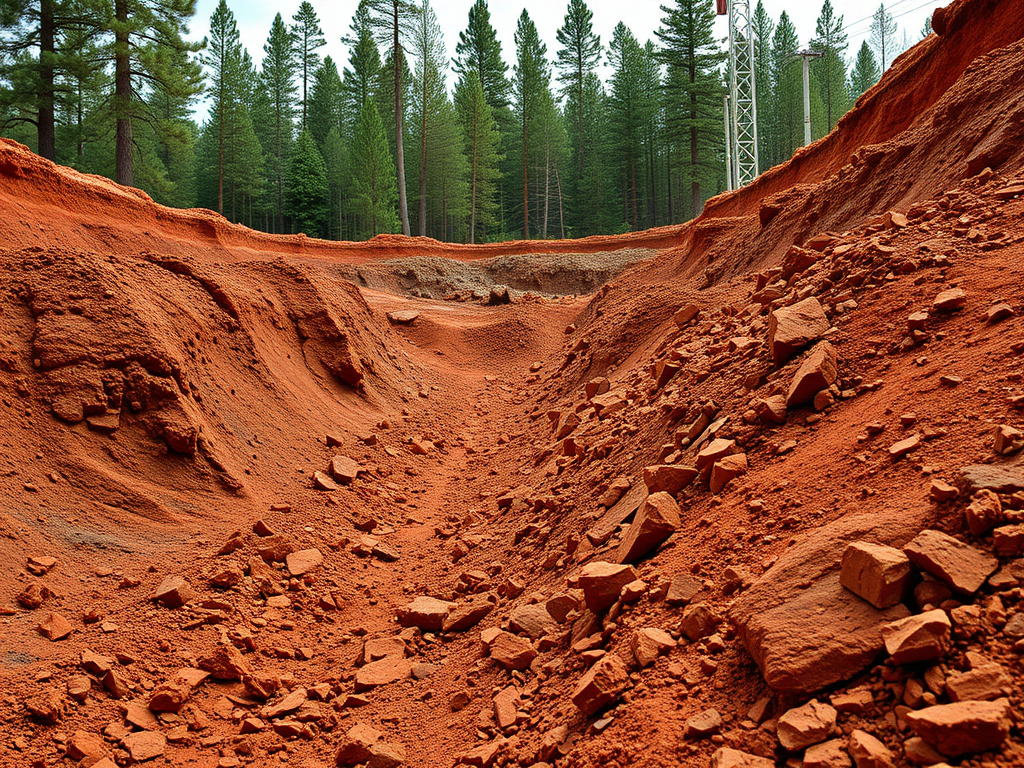
Expansive clay shows up in documented pockets across both Coconino County (the Flagstaff/High Country region) and Yavapai County (Prescott/Prescott Valley). In Flagstaff's case, the clay is generally described as a weathering product of local bedrock, and some pockets are documented as highly expansive, with heave in the range of 5-6 inches in affected soils. Prescott Valley specifically has been called out as having a notable amount of expansive soil in the area.
Expansive clay behaves like a sponge — it swells when saturated during wet periods and shrinks as it dries out, and that cyclical movement puts real stress on anything poured directly on top of it without proper base preparation. Over enough seasons, that movement is a common driver of cracking and settling in flatwork that wasn't built to account for it. In a region that also sees monsoon downpours and spring snowmelt, that wet-dry cycle can repeat more than once in a single year.
How this shapes real base prep
Across all of these soil conditions, a few base-prep principles hold, adjusted for what's actually under a given site:
- Compacted gravel base — typically 4 inches under standard flatwork, 6 inches under vehicle-load areas like driveways — provides both load support and drainage.
- In a freeze-thaw climate, that gravel base does double duty: it's not just about carrying weight, it's about giving water somewhere to drain instead of pooling and freezing under the slab.
- Sites with expansive clay pockets may need additional excavation, base correction, or drainage planning specific to that soil, rather than a standard gravel-base approach.
- Sites with shallow bedrock need different excavation planning than sites with deep, uniform soil — sometimes within a few feet of each other on the same lot.
- Grading is planned to shed both monsoon rain and spring snowmelt away from the slab, since both can saturate expansive clay or soften cinder fill if left to pool.
What this means for new construction and additions
This soil variability also matters directly for foundation and footing work, not just driveways and patios. A footing dug into unexpected clay when the plan assumed bedrock — or vice versa — can throw off both the schedule and the budget for a new build. On new-construction projects, we recommend confirming site-specific soil conditions as early as possible in the planning process, ideally before footing depth and base design are finalized, rather than discovering a surprise mid-excavation.
Why this matters before you get a quote
A concrete estimate that doesn't account for what's actually in the ground on your lot is, at best, a rough guess. Before we put together a firm number for a new driveway, patio, or foundation, we look at the actual site — not just its square footage, but what soil and drainage conditions are realistically present — because that's what determines whether a pour holds up through a decade of Northern Arizona winters or starts showing problems after the first one.
Frequently asked questions
It's workable, but it needs to be evaluated on its own terms rather than treated like standard desert fill. Composition varies by parcel, and factors like frozen cinder fill in winter or snowmelt-softened ground near washes affect scheduling and base prep — which is why we assess each Flagstaff-area site individually rather than assuming uniform conditions.
Expansive clay pockets have been documented across both Coconino and Yavapai Counties, including notable amounts in the Prescott Valley area, but it isn't uniform — a site evaluation is the only reliable way to know what's actually under your specific lot rather than assuming based on general regional patterns.
Yes — that's a genuinely common pattern in the Prescott area. Exposed granite bedrock sits near the surface in some spots while nearby drainage areas have accumulated deep expansive clay, sometimes within a few feet of each other on the same parcel, which is why site-specific evaluation matters more than a generic base-prep template.
Ready for a free quote?
Tell us about your home and we'll build a clear, no-pressure quote.