Prescott Valley's Building Boom: Planning New Concrete for a Growing Northern Arizona
Northern Arizona's growth doesn't get the same national attention as Phoenix's megaproject-driven boom, but the numbers behind it are real and directly relevant to anyone planning new construction in the region — including the new driveways, foundations, and flatwork that come with it.
Prescott Valley: the fastest-growing town in our service area
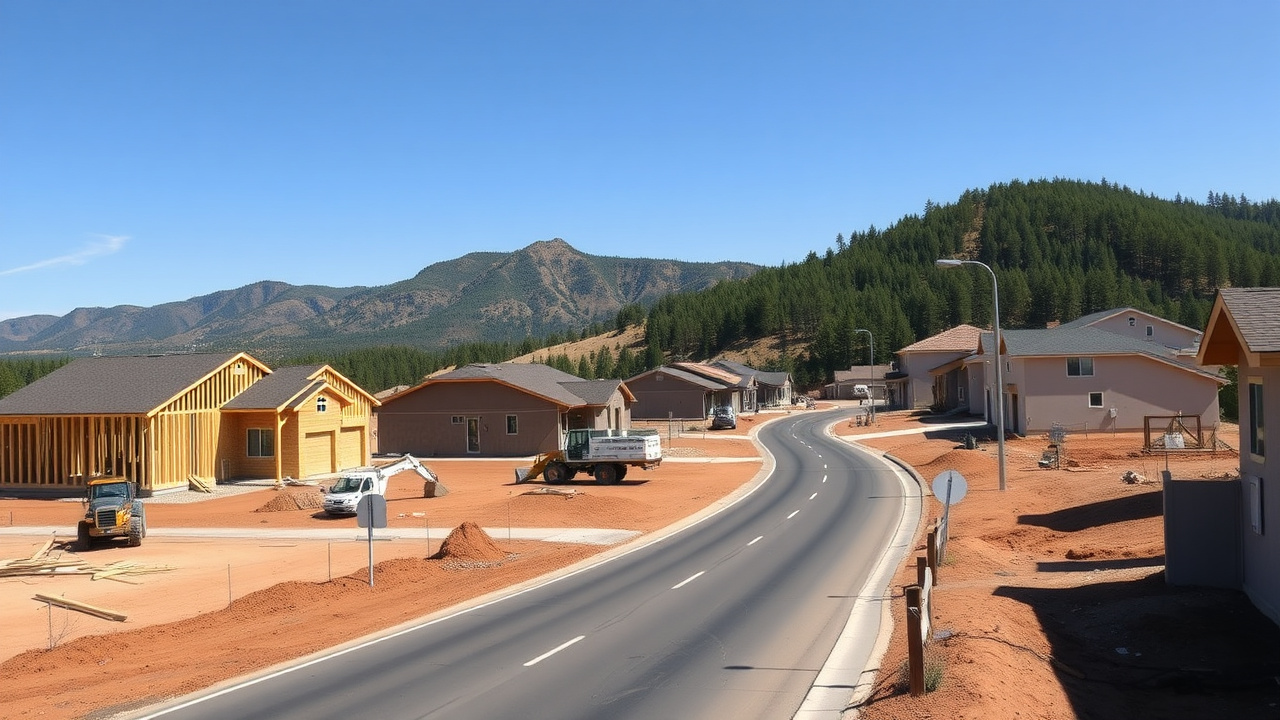
Prescott Valley's 2026 population sits at roughly 53,507, growing at approximately 2.07% annually — a growth rate that outpaces neighboring Prescott's more modest 1.08%. Since the 2020 census, Prescott Valley has grown from 46,944 to its current population, a nearly 14% increase in just a few years. That makes it the clear growth leader within Northern Arizona's broader Prescott metro area, and it shows up directly in demand for new-construction flatwork — driveways, foundations, and sidewalks in newer subdivisions and communities like StoneRidge and Granville.
Prescott itself continues to grow more steadily, at around 1.08% annually, reaching an estimated population of roughly 48,945 in 2026. Yavapai County as a whole is growing at a more modest 0.54% per year, with a 2026 population estimate around 253,908 — which underscores just how concentrated the region's fastest growth is in Prescott Valley specifically, rather than spread evenly across the county.
Flagstaff: a market anchored by NAU
Flagstaff's city population sits at roughly 77,300-78,150, with a broader market area of about 330,526 as of early 2026. A big part of what drives Flagstaff's housing and construction demand is Northern Arizona University: NAU's Flagstaff-campus enrollment has grown roughly 42% over the past decade, and the university now has close to 28,000 total students across all campuses and online programs. Roughly 22,000 students on the Flagstaff campus make up close to a third of the city's total population, and even with a record-high roughly 10,200 students in on-campus housing as of fall 2024, that still leaves thousands of students competing in the broader off-campus rental and housing market.
That demand shows up in visible infrastructure and development activity — the $18 million Butler-Fourth Improvements Project widening Butler Avenue and Fourth Street (including the upcoming Canyon Del Rio development), and a proposed 214-unit multifamily project in the Timber Sky area near US-66 and Woody Mountain Road, are two concrete examples of growth translating into real construction activity in specific Flagstaff corridors. Growth corridors like these are exactly where new-construction concrete work — foundations, driveways, and sidewalks tied to municipal standards — tends to concentrate.
Sedona: a different kind of market
Not every part of Northern Arizona is growing the same way, and it's worth being direct about that. Sedona's population has actually declined slightly in recent years — down to roughly 9,615-9,778 in 2026 from about 11,570 in 2009, a trend driven by limited developable land, strict architectural design review, and high property values that favor custom builds and remodels over volume new-construction. Only a small number of organized new-construction communities are active in the Sedona area at any given time, and no production homebuilders operate there. If you're planning concrete work in Sedona, it's far more likely to be a custom stamped patio or a design-review-driven remodel project than a new-subdivision driveway — a genuinely different market than Prescott Valley or Flagstaff's growth corridors, and one where design and material selection often matter more than volume pricing.
Payson, Williams & Munds Park: the second-home and cabin market
The smaller communities in our service area follow a different growth pattern still. Payson, with around 17,000 residents, has a strong second-home and cabin market anchored by rim-country communities like Chaparral Pines and The Rim Club, alongside more rustic, tree-tucked North Payson neighborhoods. Williams, a historic Route 66 town of roughly 2,900-3,200 people, centers much of its economy around the Grand Canyon Railway, which carries around 225,000 riders a year — a tourism-and-gateway identity more than a subdivision-growth one. Munds Park, a small forest-surrounded cabin community of roughly 1,096 residents inside the Coconino National Forest, sees seasonal building activity tied to its cabin and second-home character rather than year-round subdivision growth, with project timing often built around limited seasonal property access.
What growth means for the labor and materials side of the equation
Growth doesn't just mean more projects — it also intersects with a real, well-documented statewide construction labor shortage. Industry reporting cites more than 90% of Arizona construction firms reporting a shortage of qualified applicants, with a projected gap of roughly 200,000 job openings statewide against only about 80,000 qualified applicants. That reporting is largely driven by Phoenix-metro megaprojects pulling skilled labor toward semiconductor and heavy-industrial work, but the same statewide crunch touches job sites here too, which is part of why scheduling and lead time matter more than ever for anyone planning new-construction concrete work in a genuinely growing market like Prescott Valley.
What this means if you're building
The throughline across all of this: Northern Arizona's growth is real, but it isn't uniform, and it isn't the same story everywhere. Prescott Valley is genuinely booming. Flagstaff's growth is steady and university-anchored, concentrated in specific corridors. Sedona is a design-review, custom-build market rather than a volume-growth one. Payson, Williams, and Munds Park run on a second-home and seasonal-access rhythm.
Whichever pattern applies to your project — a new-subdivision driveway in Prescott Valley, a foundation for a Flagstaff infill build, or a custom stamped patio for a Sedona remodel — the concrete work needs to be planned around both the local growth pattern and the region's genuine freeze-thaw climate. That combination of local market knowledge and cold-weather pour expertise is exactly what we bring to every new-construction project across Northern Arizona, and it's why we build scheduling buffers into growth-corridor projects rather than assuming a Phoenix-paced timeline will hold here.
Frequently asked questions
The population data supports that — Prescott Valley has grown nearly 14% since the 2020 census and continues growing at roughly 2.07% annually, the fastest rate in Northern Arizona's Prescott metro area, which translates directly into ongoing demand for new-construction driveways, foundations, and flatwork.
Not in the way Prescott Valley or Flagstaff are. Sedona's population has actually declined slightly in recent years, and strict architectural design review combined with limited developable land keeps new-construction volume low — most concrete work there tends to be custom patios, walkways, or remodel-driven projects rather than new-subdivision flatwork.
It can. The shortage is documented at the statewide level and is largely driven by Phoenix-metro megaprojects, but the same labor crunch touches job sites across Arizona, including Northern Arizona. That's part of why realistic scheduling and lead time matter, especially in a fast-growing market like Prescott Valley.
Ready for a free quote?
Tell us about your home and we'll build a clear, no-pressure quote.